
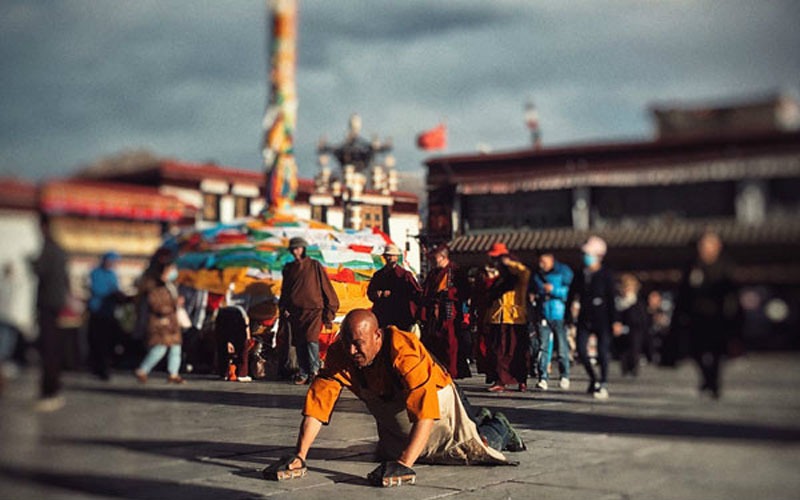
Tibet
西藏
A Journey Through Time
A Journey Through Time
Tibet is open for travelling. As one of the most fascinating places in China, it's known for the dramatic mountains, ancient monasteries, and unique culture. However, independent foreign visitors are not allowed to explore Tibet on their own. You must book through a licensed travel agency and be accompanied by a local guide. In this guide, we'll walk you through everything you need to know to pl
Content Preview
What Documents Do I Need for Visiting Tibet?
How to Get to Tibet
How Many Days to Spend in Tibet?
Best Time to Visit Tibet
Where to Stay in Tibet
Visiting Tips
What Documents Do I Need for Visiting Tibet?
To visit Tibet, the most important document is the Tibet Travel Permit (Tibet Entry Permit), which you must apply for through a licensed travel agency before arrival. With this permit, you can explore Lhasa and many nearby areas.
Tibet Travel Permit
If you plan to travel further, such as to Shigatse, Nyingchi, Ngari, or Everest Base Camp, you will also need additional permits. These may include the Aliens' Travel Permit, issued by the local Public Security Bureau, and in some cases a Military Permit for sensitive border regions.
There's no need to worry about handling the paperwork yourself. Travel with us, and we will arrange all necessary permits once you provide a copy of your passport and Chinese visa.
How to Get to Tibet
There are two main ways to reach Tibet: from China's mainland or from Nepal. Entering from China is the easiest and most convenient option for most travelers.
From China's Mainland - Most Easiest
There are direct flights from China's major cities to Lhasa in Tibet, such as from Beijing, Shanghai, Chengdu, and Chongqing. The most frequent and reliable flights to Tibet are from Chengdu, with about eight flights per day.
Trains to Tibet depart from these cities: Beijing, Shanghai, Guangzhou, Xi'an, Chongqing, Lanzhou, and Xining.
Xining is the best place to start the train journey, as it is the beginning point of the most beautiful section of the Qinghai-Tibet Railway with the shortest train journey to Lhasa (20â22 hours), compared to around 30â50 hours for further departure points.
Qinghai-Tibet Railway
Tip: Taking a flight into Tibet is better than a train because a good sleep in a hotel in Lhasa is much more helpful to altitude acclimation than spending a night on the train.
Most passengers find it more difficult to fall asleep on the train, and tiredness makes altitude sickness more uncomfortable.
1. Book an international flight from a major U.S. city to a gateway city in China, such as Beijing, Shanghai, or Guangzhou.
2. Spend 1â2 days in your arrival city to recover from jet lag and enjoy some sightseeing.
3. Take a domestic flight to Chengdu, the most convenient hub for flights to Tibet. Almost all flights to Lhasa transit through Chengdu. You can stay overnight in Chengdu, and you'll have chance to see China's giant pandas or try local Sichuan food.
4. From Chengdu, take a morning flight to Lhasa (about 2½ hours). Arriving earlier in the day gives you time to rest and acclimatize to the altitude before bedtime, which helps reduce the risk of altitude sickness.
From the Nepal Side
You can also enter Tibet from Kathmandu, either by flight or overland via the Gyirong border (possibly with a convenient side tour to Mount Everest).
However, when traveling to Tibet from Nepal, you should first consider issues of a China visa and Tibet Entry Permit, no matter whether you'll go by flight or road. Procedures are different from traveling from a Chinese mainland city to Tibet.
You must apply for a China visa and Tibet permits in Nepal via a travel agent. Any China visa issued in your resident country will be invalid for Tibet travel. You will need to stay in Kathmandu for at least 3 working days to wait for the visa and permit.
You can check more details at How to Travel from Nepal.
How Many Days to Spend in Tibet?
For most first-time visitors, a 7â8 days trip to Tibet is ideal. It balances classical spots, cultural depth and natural beauty, while giving your body time to adjust to the altitude.
However, the length of your Tibet trip depends on your interests and physical condition. Here are some common options to help you plan:
4â5 Days: Lhasa and Yamdrok Lake
This is the classic short trip within and around Lhasa. You'll have time to adjust to the high altitude, and explore the famous Potala Palace, meet devout pilgrims at Jokhang Temple, and see the monks debate at Sera Monestery.Â
Visit Potala Palace
Outside the city, a drive to Yamdrok Lake brings you to shimmering turquoise waters framed by snowcapped peaks. This option may take half a day to a full day. It is perfect if you want a quick yet unforgettable taste of both culture and nature.
Lake Yamdrok
7â8 Days: Add Everest Base Camp (EBC) or Nyingchi
With a week in Tibet, you can go beyond Lhasa. Traveling west, the road to Everest Base Camp takes you across high passes and reach Rongbuk Monastery, the world's highest temple. A night here lets you wake up to sunrise over Mount Everest â a moment travelers never forget.
Our guests at Everest Base Camp
If you prefer lower altidude and nature scenery, head east to Nyingchi and Bome. In spring, valleys bloom with peach blossoms, while year-round you'll see Namcha Barwa glowing at sunrise. At Bome, you can walk through the vast Lulang Forest Sea, and visit the deep blue Laigu Glacier in winter.
Mt. Namcha Barwa and peach blossoms at Nyingchi
12â13 Days: Mount Kailash and Lake Manasarovar
Nearly two weeks gives you time to journey into western Tibet. Here you'll find Mount Kailash, sacred to Buddhists and Hindus, where pilgrims circle the mountain on a three-day kora trek. Nearby holy lake Manasarovar shines like a mirror, beside it lies the deep blue ghost lake Rakshastal.Â
Mt. Kailash kora
This is a demanding trip, with long drives and high altitude, but it rewards you with landscapes and spiritual moments found nowhere else.
More Than 2 Weeks: In-Depth Exploration
With over two weeks, you can experience Tibet at a slower pace and reach its most remote corners.Â
In addition to classic highlights like Lhasa, Yamdrok Lake, Everest Base Camp, and Nyingchi, you'll have time to journey into western Tibet's Ngari (Ali) region. This vast, untamed land is home to Mount Kailash, Lake Manasarovar, Zanda Tulin, and rugged highland scenery that feels worlds away from modern life.
Lake Manasarovar
Longer itineraries also mean more free time and flexible trip. Since travel in Tibet often involves many hours on the road, extra relaxing time will makes your journey more comfortable. See our Top 10 Things to Do in Tibet.
Tip: Foreign visitors cannot explore Tibet independently. All visits to attractions must be accompanied by a licensed local guide, so plan your schedule with this in mind.
Best Time to Visit Tibet
Generally, the best time to visit Tibet is from May to October. However, the ideal period depends on your interestsâwhether you want to trek, admire plateau landscapes, or immerse yourself in Tibetan festivals.
The weather in Tibet is largely affected by altitude. Therefore, even in the same month, the temperature in southern (low altitude) and northern (high altitude) Tibet can be very different.
Every season has its advantages and characteristics. Exploring Tibet in different months shows you different scenery and cultural activities for different travel experiences.
Spring (AprilâMay): Pleasant weather, fewer crowds, and lower hotel prices (except the May 1â5 holiday). Nyingchi's peach blossoms are a highlight.
Spring (AprilâMay):
Summer (JuneâAugust):
Autumn (SeptemberâOctober):
Winter (NovemberâMarch):
For more details, see Best Times to Visit Tibet.
Where to Stay in Tibet
Tibet is remote, high-altitude, and has limited infrastructure. Hotels are fewer, more expensive, and often below the standard of big Chinese cities. Foreign travelers can only stay at certified hotels, so options are further restricted.
The best choices are in Lhasa, Shigatse, and Nyingchi:
Lhasa: widest range of hotels, from international chains to Tibetan-style boutiques, especially near the Potala Palace and Barkhor Street. Luxury hotels with oxygen supply are available.
In remote areas like Everest Base Camp and Mount Kailash, expect very basic hostels, shared dorms, and poor facilities (EBC is slightly better).
For comfort, we recommend choose higher-rated hotels in Tibet. Since only certified hotels accept foreign guests, it's best to let us help you book the right one for your needs and budget.
Transportation within Tibet
Traveling around Tibet is mainly done by private car. The drive can be long, but the road journeys are part of the experience.Â
You'll see snow-capped mountains, rivers, lakes, and vast grasslands along the way. On our private tours, we design routes to minimize time on the road, and you'll have a comfortable vehicle with a guide accompanying you throughout the trip.
There are also train connections from Lhasa to Shigatse, Nyingchi, Shannan, and Nagqu, which can be a effective alternative. However, if you travel by train, our private car and guide may not accompany you the whole way, since vehicles are arranged from Lhasa.
Flights are available between Lhasa, Shigatse, and Nyingchi, but they are limited in number and not always reliable.
Budget for a Trip to Tibet
The cost of traveling in Tibet depends on factors such as season, tour length, group size, hotel standard, and whether you choose a private or group tour. As a reference, an 8-day private tour for two people costs around USD 2,200 per person, covering transfers, meals, entrance fees, hotels, and guiding.
To save money, consider booking a few months in advance to secure early discounts, or travel with four or more people to share private tour costs. Winter (DecemberâJanuary) is the most budget-friendly season, with reduced prices on flights, hotels, and entrance tickets.
Visiting Tibet is Safe, But Be Prepared for Altitude Sickness
Tibet is generally very safe, with a low crime rate and a reliable security measures, especially in Lhasa.Â
The real challenge for most travelers is altitude sickness, as the average elevation is around 4,500 meters (15,000 feet). Most visitors, including seniors and kids, can travel safely, but it's wise to consult a doctor if you have heart or blood pressure concerns.
Here are some practical methods to help you to ease the altitude sickness:
1. To help your body adjust, avoid washing your hair or taking long showers during your first 2â3 days in Lhasa, and steer clear of strenuous activities such as running, jumping, or climbing steep stairs.Â
2. If you plan to visit higher-altitude spots like Yamdrok Lake or Everest Base Camp, spend at least 3â4 days in Lhasa first.Â
3. Oxygen therapy can ease discomfort, especially at night, when good sleep is crucial for acclimatization.Â
4. Wearing a warm hat helps protect your head from cold winds and may reduce headaches.
When traveling with us, you'll have oxygen bottles and altitude medicine available in your private car, and our experienced local guides can ensure you receive prompt assistance if needed.
Oxygen bottles are always provided in the car
Key Things to Remember When Planning a Tibet Trip
1. Book your tour at least 10 days in advance to ensure we have plenty of time to apply for your Tibet permits.Â
2. Don't buy flights before the permit is issued, and avoid planning a trip in March when Tibet is closed to foreign travelers.Â
3. Keep your schedule flexible to adjust to the altitude, and avoid changing your itinerary after the permit is granted, as it will require reapplication.
Visit Tibet with Us
We can help you to get all the documents needed and can create your ideal Tibet itinerary. Check out our most popular Tibet tours:
8-Day Lhasa to Everest Base Camp Tour
7-Day Tibet Tour by Train from Xining
7-Day Tibet Tour including Trekking and Camping
5-Day Lhasa Classics and Lake Yamdrok Tour
4-Day Lhasa Highlights Comfort Tour
Or contact us to customize your experience.
Other destinations you may love.

Plan your trip to Tibet.
Visas, hotels, guides, experiences — all taken care of by our local team in Shenzhen.
Plan Your Journey